Ripplewise

The story

From stone-crusher to healer

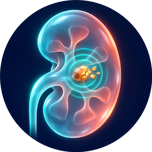
Shockwave began as a way to break up kidney stones without surgery. Then doctors noticed something nobody expected: the body was using the waves to heal. Here's how a happy accident became one of the most exciting tools in regenerative care.

How it was discovered

1

It started with airplanes

Engineers at Dornier, a German aircraft maker, were puzzled. Planes flying near the speed of sound were getting tiny pits on their surfaces. The cause was the shock wave that forms in front of each raindrop. That discovery, plus close work with hospitals, led to a new idea: use shock waves to deliver energy inside the body without cutting the skin. (Dornier company history (opens in new tab))

Milestones

Four decades of discovery

  1. 1980

    The first patient

    On February 7, after 7 years of research, a team in Munich breaks up a kidney stone with shock waves, no surgery needed.

    Source: Chaussy, Legends in Urology, Can J Urol (opens in new tab)

  2. 1984

    FDA approval

    The FDA approves shock wave lithotripsy in the U.S. It goes on to help millions of people around the world.

    Source: Marketing approval for the lithotripter (PubMed) (opens in new tab); Dornier company history (opens in new tab)

  3. 1991

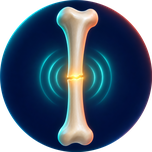
    Stalled fractures heal

    Doctors in Bulgaria treat 82 fractures that had stopped healing. 70 of them heal.

    Source: Valchanou & Michailov, Int Orthop 1991 (opens in new tab)

  4. 1992

    Bone answers back

    After doctors noticed hip bone thickening in the path of lithotripsy waves, a study in rats shows shock waves speed up fracture healing.

    Source: Hinz et al., case report citing Haupt's finding (opens in new tab); Haupt et al., Urology 1992 (opens in new tab)

  5. 2000

    First orthopedic approval

    The FDA approves the OssaTron, the first shockwave device for chronic heel pain (plantar fasciitis).

    Source: FDA PMA P990086 (OssaTron) (opens in new tab)

  6. 2003

    Big trial, big discovery

    A double-blind JAMA trial shows major gains for calcific shoulder tendinitis, and lab work shows shock waves grow new blood vessels.

    Source: Gerdesmeyer et al., JAMA 2003 (opens in new tab); Wang, Chang Gung Med J 2003 (opens in new tab)

  7. 2005

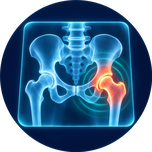
    Help for the hip bone

    In a randomized trial for early-stage loss of blood supply to the hip bone, 79% of hips improve with shockwave, versus 29% after bone-graft surgery.

    Source: Wang et al., J Bone Joint Surg Am 2005 (opens in new tab)

  8. 2015

    A 250-patient heel trial

    A double-blind trial finds heel pain drops 69% with shockwave, versus 35% with placebo.

    Source: Gollwitzer et al., J Bone Joint Surg Am 2015 (opens in new tab)

  9. 2017

    Healing wounds

    The FDA authorizes the first shockwave device for diabetic foot ulcers.

    Source: FDA news release, Dec 28 2017 (opens in new tab)

  10. Today

    Head to toe

    Researchers keep finding new places shockwave can help, from the jaw and neck to the hands, hips, knees and feet.

    Source: ISMST recommendations (opens in new tab)

The science keeps growing

Researchers keep finding new ways sound waves help the body heal

Once scientists understood that shock waves grow new blood vessels, they began testing them in other areas of medicine too. Two examples:

These are research areas, shared to show how far the science has come. They are not the focus of this guide. Ripplewise is about muscle, tendon, ligament and joint pain.

Be part of the story

Find out if shockwave can help

A trained provider can look at the area, talk through what the research found, and help find out whether shockwave could help.

What to ask your provider

  • What's my diagnosis?
  • Is shockwave a good fit for my condition, and what does the research say about it?
  • What would my plan look like, and what does it cost?
  • What exercises should I do alongside it?